Biatorbágy is a prosperous, rapidly growing, and highly motorized town in the Budapest metropolitan area; pedestrians are seen only at a few locations in the town. Its role as a regional hub, its extensive industrial and logistics parks, and its rich network of educational institutions generate significant traffic. Due to the town’s old, rural road network structure and the intensive construction of residential developments in recent decades, the road network’s capacity has been exhausted. Despite the growing demand, the city lacks an internal bicycle network. The city’s transportation concept provides a professionally grounded assessment of the current situation, outlines the town’s vision for future mobility, and sets forth a phased action plan to promote sustainable transportation development.
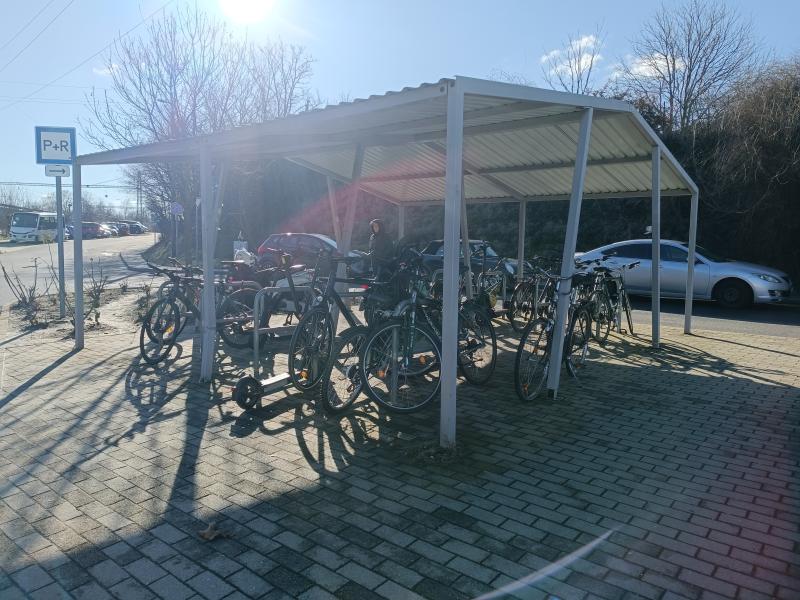
Bike & Ride facility at the railway station
Background and Objectives of the Project
The objective of the Transport Concept is to provide a comprehensive, easy-to-understand assessment of the current situation in Biatorbágy and to identify directions for development. The document places a strong emphasis on the involvement of residents and local experts (an online survey with 646 responses, resident and expert focus groups, and traffic and passenger counts). The concept outlines realistic, effective interventions in the areas of the local bus network (called ViaBusz), rail transfers, the cycling and pedestrian network, parking policy, and the management of road congestion.
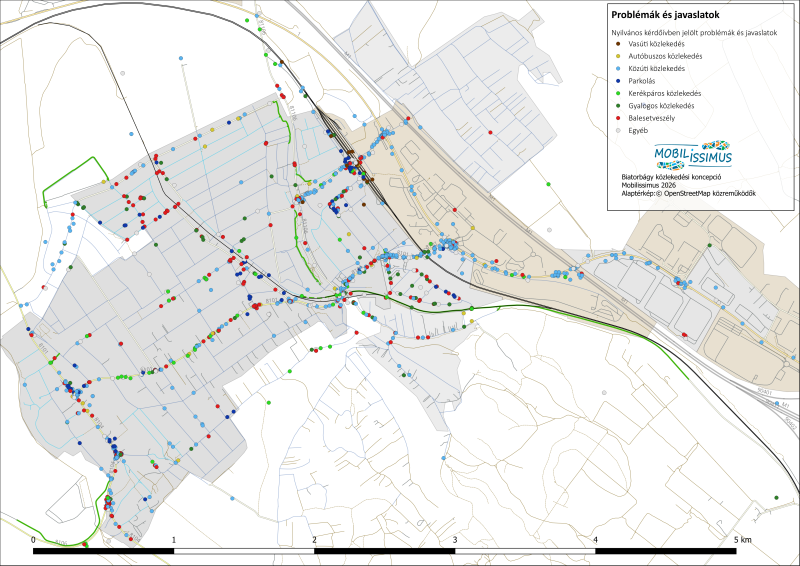
Problems and ideas - based on the answers of the public questionnaire
Key Findings and Areas of Intervention
- Road network and congestion: the city’s main road problem is the difficulty of accessing Route 1 and the M1 motorway (particularly due to the lack of capacity of the roundabout on Route 1). Due to traffic bottlenecks, drivers from neighbouring settlements as well as local motorists are diverting onto narrow suburban residential streets to avoid congestion, increasing through traffic on these roads.
- Public transportation:
- Rail: rail line 1 is Biatorbágy’s most important connection to Budapest, but passenger numbers have declined due to delays and a shortage of trains. The Bike&Ride facilities at the station are full, and the accessibility and pedestrian access to the Park&Ride parking lots need to be improved.
- Local bus (ViaBusz): the free local bus network is popular and plays a particularly important role in transporting students. Improvements are needed in terms of coordinating bus schedules with train connections, aligning schedules with school start times, digitizing passenger information, and improving service outside peak hours and on weekends.
- Regional buses (Volán): these are important for regional student commutes and for feeding passengers to rail services, but city traffic jams also hinder bus service.
- Active Mobility and Traffic Safety:
- Pedestrian Traffic: the pedestrian network is incomplete (e.g., Szarvasugrás, Ország Street), and safe crossings are lacking in many places (especially on Szabadság Way and under the Viadukt).
- Cycling: there is no coherent internal cycling network. The routing of the Budapest–Balaton (BuBa) bike path—which was built as a state-funded project—through the city remains unresolved and is causing tension; it would be advisable to reroute it along the stream bank, while the local network should be connected to schools, institutions, and the railway.
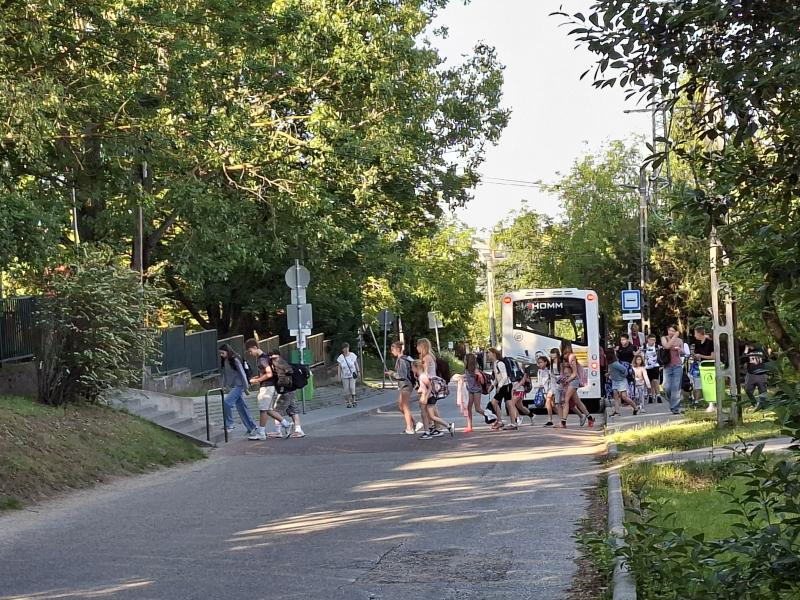
Schools and kindergartens: a significant portion of the morning rush hour traffic consists of parents driving their children to these institutions. The goal of these measures is to ensure safe travel to school on foot, by bicycle, and via ViaBusz.
ViaBusz at the school
Client: City of Biatorbágy
Year of fulfillment: 2026